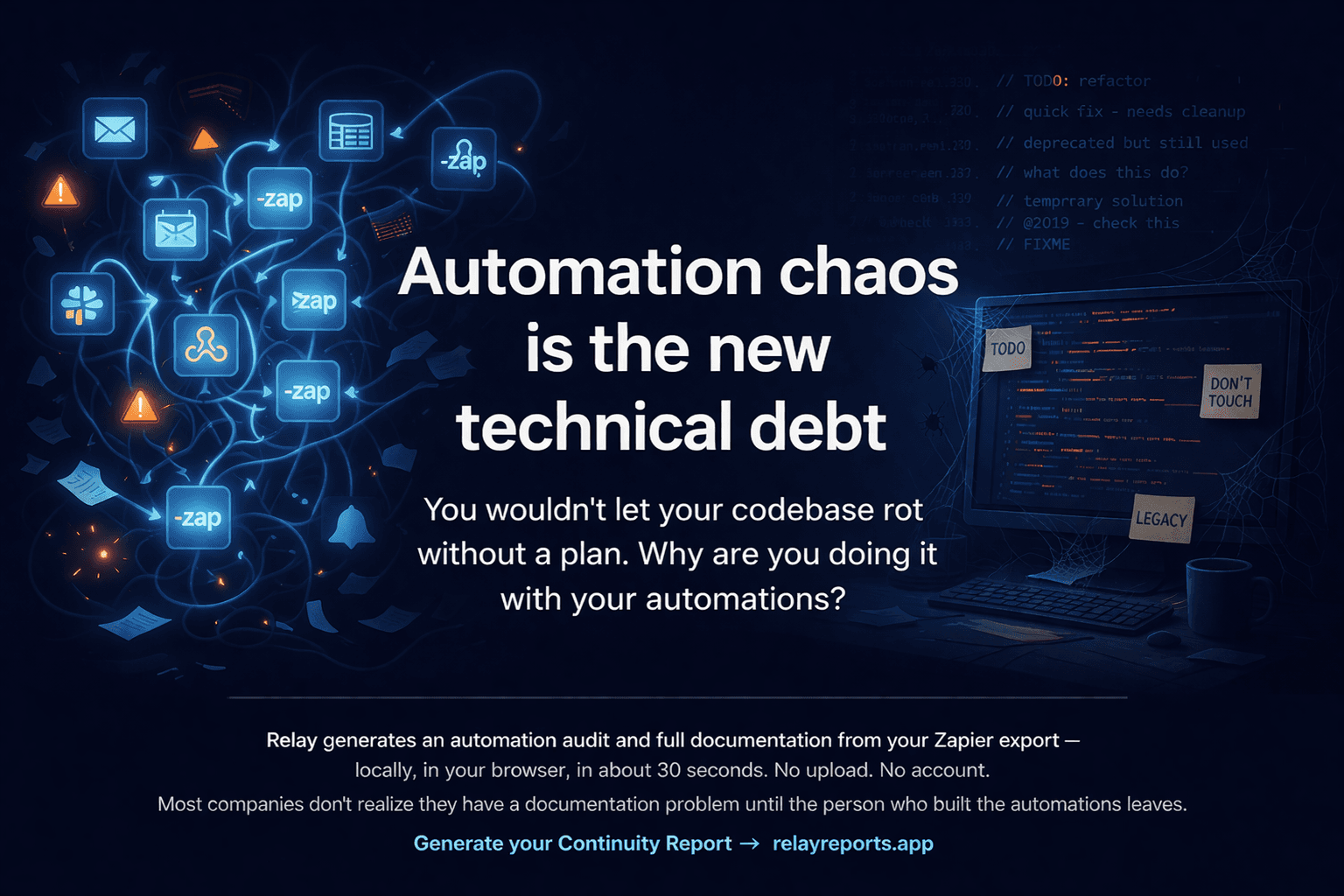

Your Automations Are Running Your Business. Does Anyone Actually Understand Them?

Most companies couldn't answer that question honestly. Here's why it matters — and what to do about it.
At some point, automations stop being a productivity tool and become infrastructure.
They route your leads. They trigger your invoices. They sync your customer data between systems. They send the emails your customers expect to receive. They update the spreadsheets your team makes decisions from.
Nobody planned for this. It happened gradually, one workflow at a time, until one day the automations weren't supporting the business — they were the business. Or at least a significant, invisible part of it.
And somewhere along the way, the understanding of how all of it works got concentrated in one person's head. Or split across three people who each know their piece. Or — most dangerously — it walked out the door with someone who left.
The question most companies can't answer
Here's a simple test. Try to answer these questions about your current automation stack:
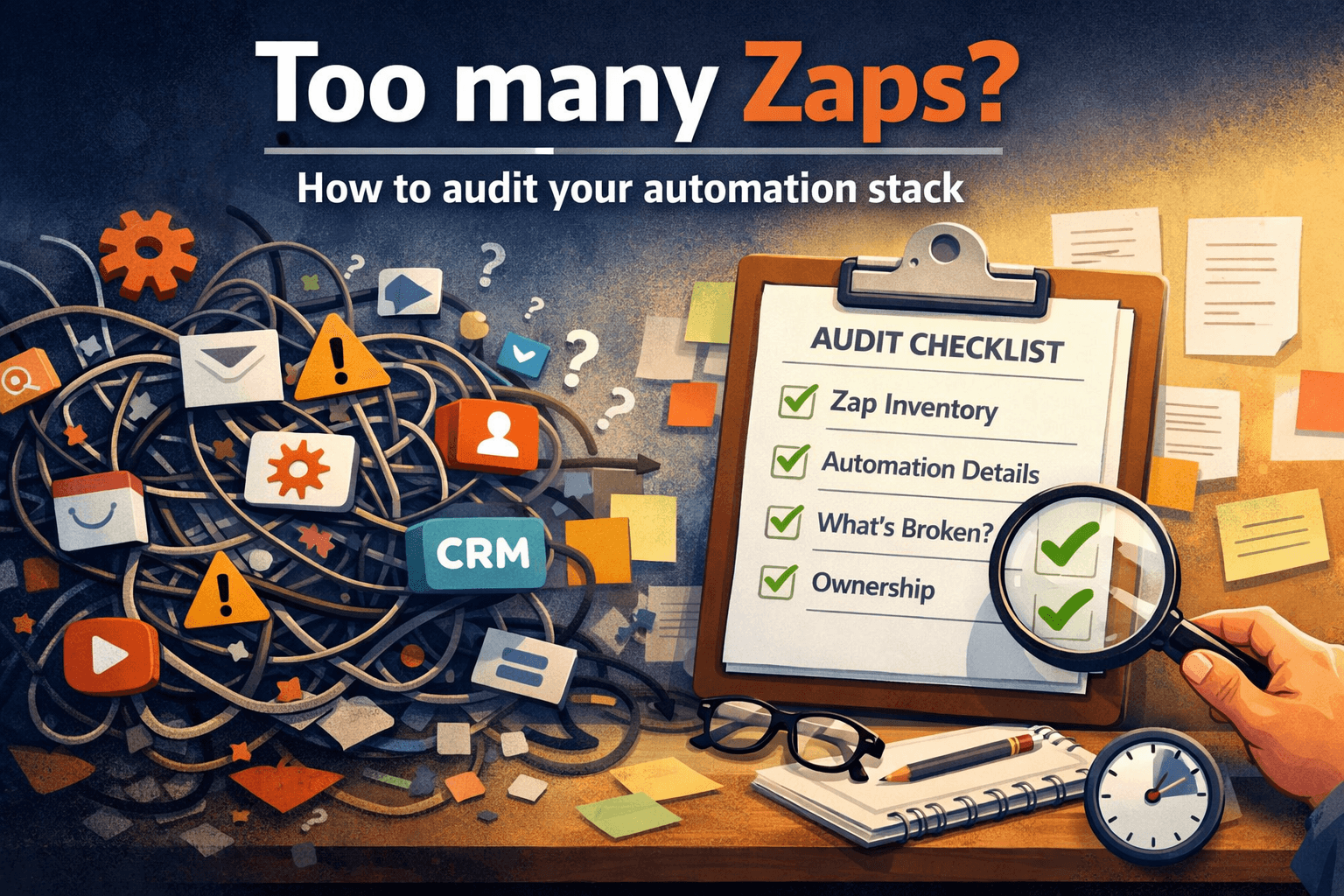
How many active automations does your company have right now?
Which ones would cause immediate problems if they stopped working?
Who is responsible for each one?
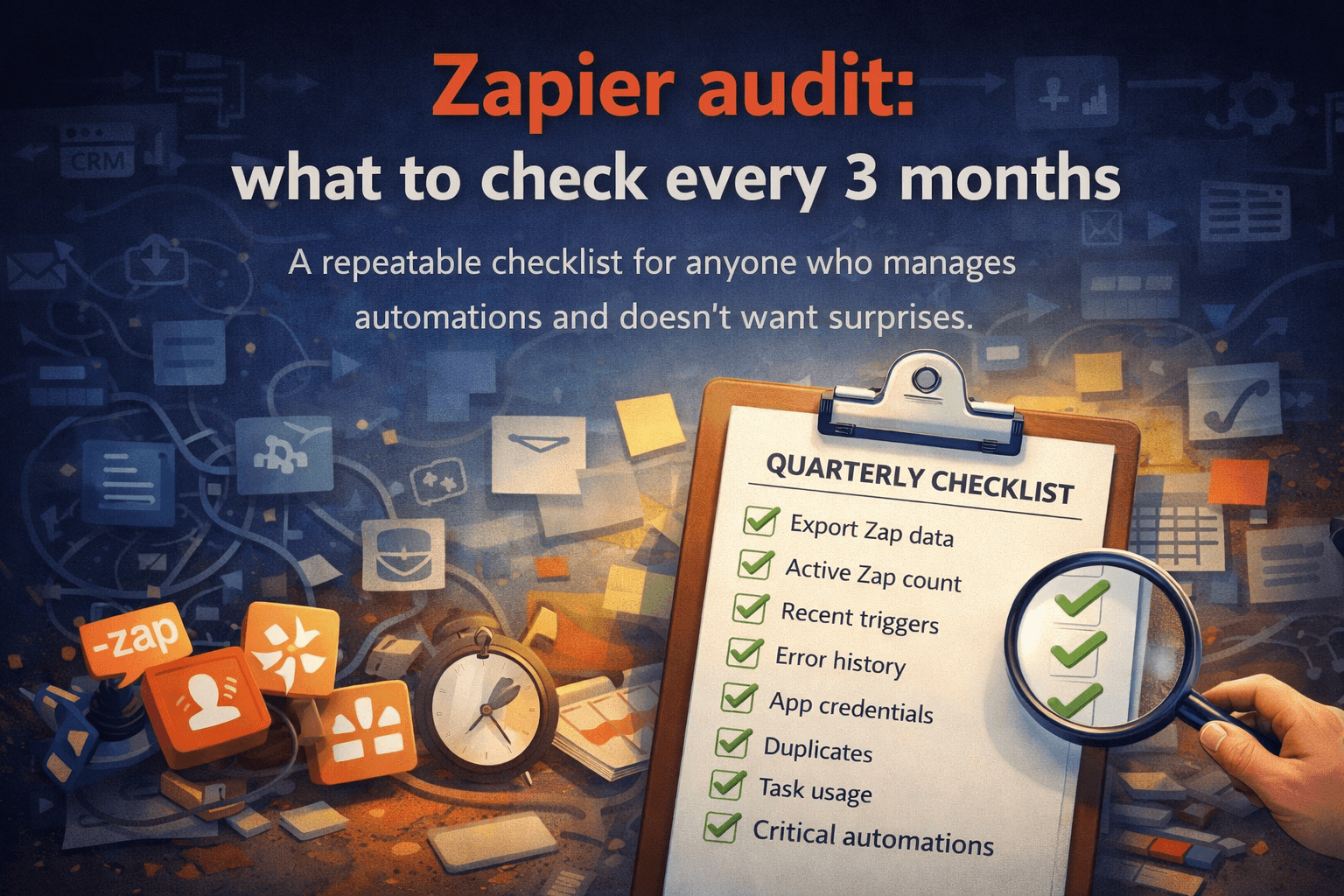
When did someone last check that they're all working correctly?
If you can answer all four confidently, you're in the minority.
Most companies — even ones that are otherwise well-run — have no good answers here. Not because they're careless, but because automation knowledge accumulates in an undocumented, unstructured way that nobody planned for.
How this happens
It starts with one person who's good with tools.
They set up a few automations. They work. More get added. The person becomes the go-to for anything automation-related. Over time, they're maintaining dozens of workflows that touch every part of the business.
Then one of three things happens:
They leave. And suddenly nobody knows what's running, why it's running, or what breaks if it stops.
They get promoted. And they no longer have time to maintain the stack they built, but nobody else understands it well enough to take over.
The company grows. And what worked for a 10-person team starts showing cracks at 40 people, but nobody has a clear picture of what needs to change.
In all three cases, the result is the same: a business that depends on a system nobody fully understands.
Why this is riskier than it looks
The dangerous thing about automation failures isn't usually the immediate break. It's the silent failures.
A Zap that stopped firing three weeks ago. Leads that aren't making it into your CRM. Invoices that aren't being created. Onboarding emails that aren't sending.
These things can go wrong quietly for days or weeks before anyone notices — because everyone assumed the automation was handling it.
When your team doesn't understand the automation stack, they also can't monitor it effectively. They don't know what to check. They don't know what normal looks like. So problems compound before they surface.
The organizational version of the problem
This isn't just a technical problem. It's a knowledge management problem.
Automation knowledge — what's running, why it exists, what it connects to — is institutional knowledge. The same way you'd want documented SOPs for your sales process or your onboarding flow, you need documented understanding of your automation stack.
Most companies have this for their human processes. Almost none have it for their automated ones.
The result is an asymmetry: your human workflows are visible and transferable, but your automated workflows are invisible and fragile. The more you've automated, the bigger that fragility becomes.
What "understanding your automations" actually means
You don't need everyone on your team to understand every workflow. That's not realistic and it's not necessary.
What you need is:
One person with full visibility. Someone who knows — or can quickly find out — what's running, what it does, and what depends on it. Not necessarily the person who built it. Just someone who owns the map.
Documentation that survives personnel changes. If that one person left tomorrow, could someone else pick up the map and use it? If not, you still have a single point of failure — just a documented one.
A way to answer the basic questions quickly. What's active? What's critical? What broke recently? These should be answerable in minutes, not hours.
That's it. It's not about perfect documentation or comprehensive audits. It's about having enough visibility that the automation stack stops being invisible infrastructure and starts being something your organization actually understands and owns.
Where to start
If your honest answer to "does anyone understand your automations?" is "not really" — start small.
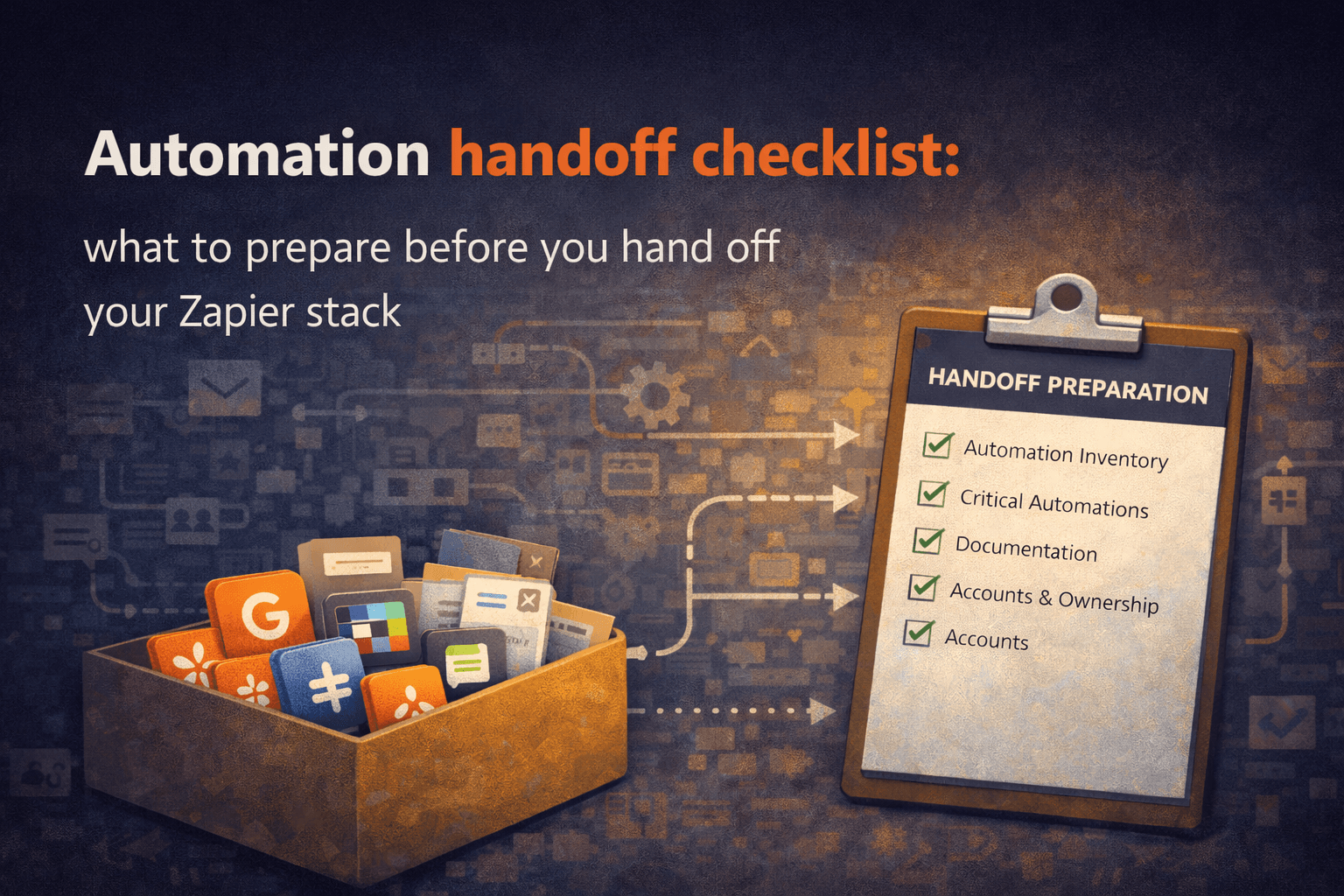
Pick the five automations most likely to cause real problems if they broke. Document just those. Give them an owner. Put them somewhere the team can find.
That's not a complete solution. But it's the difference between zero visibility and some visibility — and some visibility changes how your team thinks about automation risk entirely.
The goal isn't to document everything overnight. The goal is to make the invisible visible, one piece at a time.
If you want to start with a structured overview of what's actually running in your Zapier account — without spending days on it — Relay Reports generates a PDF summary of your entire automation stack from your Zapier export. Everything stays local in your browser.