
Automation chaos is the new technical debt
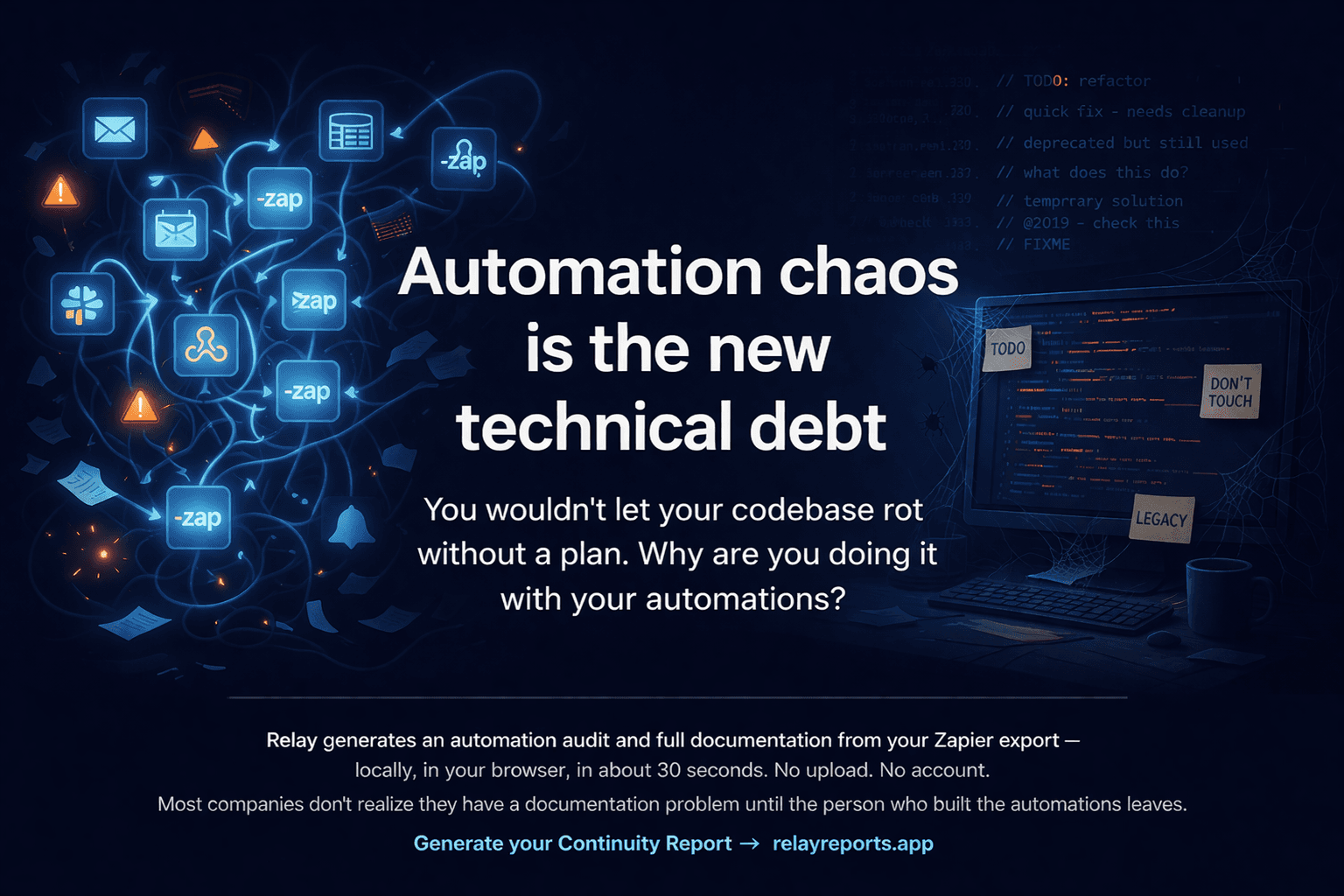
You wouldn't let your codebase rot without a plan. Why are you doing it with your automations?
Every developer knows what technical debt is.
It's the shortcuts you took to ship faster. The functions nobody wants to touch. The commented-out code that's been there since 2019 and everyone is afraid to delete. The system that works — until it doesn't — and when it breaks, nobody remembers why it was built that way.
Technical debt is a tax you pay later for moving fast now.
Automation chaos is the same thing.
Just less visible.
It starts the same way
Nobody sets out to build a mess.
It starts with one Zap. One workflow. One “I’ll just connect these two things and it’ll save us an hour a week.” It works. So you add another. Then someone else adds three more. Then there’s a folder called DO NOT TOUCH and nobody remembers who created it.
Six months later you have 40 automations, half of them overlapping, a few of them definitely broken, and no single person who understands the whole picture.
That’s not a Zapier problem.
That’s a debt problem.
The difference between technical debt and automation chaos
With technical debt, at least someone usually knows it exists.
Developers track it. They add TODO comments. They create tickets. They have retrospectives where someone says, “we really need to refactor this,” and everyone nods.
Automation chaos is invisible by default.
There’s no version control.
No code review.
No staging environment where you test changes before they hit production.
Someone edits a live Zap, something downstream breaks, and you find out three days later when a customer emails you.
The people who built the automations often don’t think of themselves as building software. So they don’t apply any of the discipline that software development learned the hard way over 50 years.
They just build. And it accumulates.
What automation debt actually costs
It’s not dramatic. It’s slow.
You pay for it in Zapier tasks that run for no reason — because someone set up a Zap in 2022 that duplicates work another Zap already does, and nobody noticed.
You pay for it in hours spent debugging a broken workflow that nobody documented.
You pay for it when a new hire spends two weeks trying to understand what they inherited.
And sometimes you pay for it in customers who never got their onboarding email. In invoices that didn’t go out. In leads that sat in a spreadsheet instead of your CRM while the sales team wondered why the pipeline was quiet.
The cost is real.
It’s just distributed across enough small failures that it never triggers an incident review.
Why it’s harder to fix than technical debt
With code, you can at least read it.
You can open the file, follow the logic, understand what it’s doing even if it’s ugly. Static analysis tools can flag complexity. Tests can tell you when something breaks.
Automations are different.
They’re event-driven, distributed across multiple third-party platforms, and the “code” is a series of UI-configured steps that often only make sense if you know the business context behind them.
“Send Slack message when deal stage changes” — fine.
But why? Which team needs to know? What do they do with that notification? What happens if the Slack channel gets renamed? What if the deal stage criteria changes?
That context lives in someone’s head.
Or it used to.
The fix isn’t a rewrite
With technical debt, the temptation is to do a big rewrite. Clean slate. Start fresh.
It almost never works for code and it definitely won’t work for automations. You don’t know enough about what each workflow does to safely replace it. And the business keeps running on the old system while you’re rebuilding, which means you end up maintaining both.
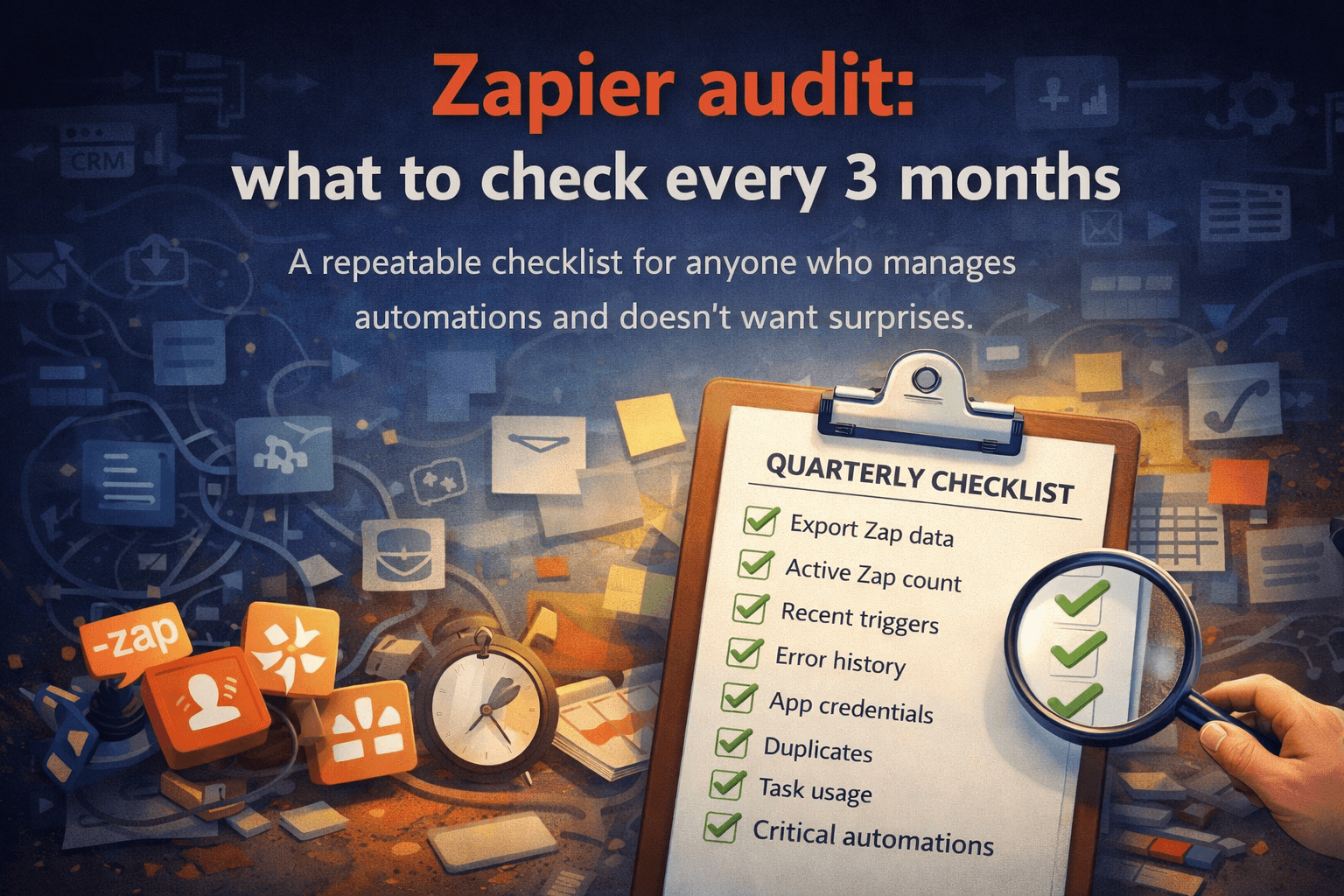
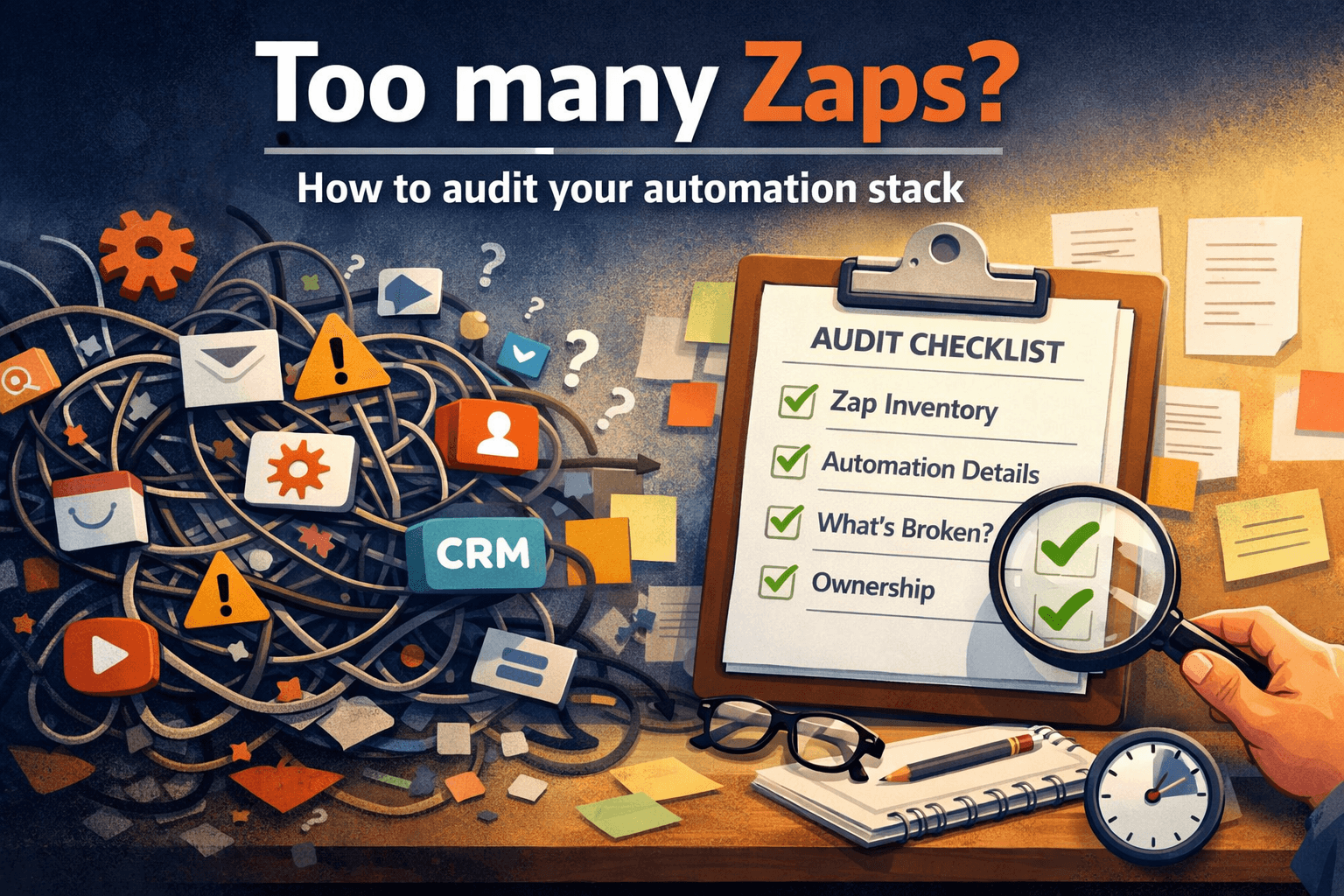
The actual fix is documentation and visibility — knowing what you have, what it does, and what the failure modes are.
Not a rewrite.
An audit.
What’s running?
What’s broken?
What’s duplicated?
What’s tied to credentials that no longer exist?
What would break if you turned it off?
Once you can answer those questions, you can make decisions.
Until then you’re just guessing.
The uncomfortable parallel
Companies that ignored technical debt long enough eventually hit a wall — a system so fragile that every change breaks something else, so complex that no one person understands it, so undocumented that onboarding a new engineer takes months.
Automation stacks are heading in the same direction. Faster than most people realize, because the barrier to adding a new automation is so low.
A few clicks and it’s live.
No review.
No documentation required.
No one asking, “do we already have something that does this?”
The debt accumulates quietly.
Until it doesn’t.
What you can do right now
You don’t need a full audit process. Start with three questions:
Do you know how many active automations your company has?
Could someone other than the person who built them explain what they do?
Do you have a way to know when one breaks before a customer tells you?
If the answer to any of those is no, you have automation debt.
And unlike technical debt, it usually doesn’t come with a warning before it causes damage.
And unlike technical debt, it usually doesn’t come with a warning before it causes damage.
Most companies don't realize they have a documentation problem until the person who built the automations leaves.
Relay generates an automation audit and full documentation from your Zapier export — locally, in your browser, in about 30 seconds. No upload. No account.
Generate your Continuity Report → relayreports.app